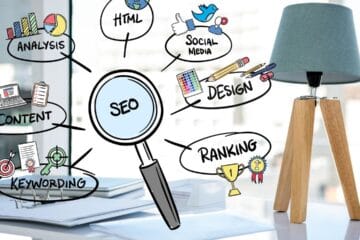

A comprehensive on-page SEO checklist involves optimizing individual web pages to rank higher by aligning content with user intent, ensuring technical health, and refining HTML elements like title tags and headers. By systematically addressing these factors, you ensure that Google’s crawlers and your human visitors instantly recognize the value and relevance of your website.
A few years ago, I spoke with a small business owner named Marcus who ran a boutique home-renovation firm. He had written over fifty blog posts, detailing every project with passion and expertise. Yet, despite his hard work, his website traffic was stagnant. He was frustrated, feeling as though he was shouting into a void while his competitors, who wrote less but optimized more, took all the local leads. Marcus realized that quality content is only half the battle; the other half is making sure Google knows it exists.
Your content deserves to be seen, but search engines don’t reward effort; they reward optimization.
In this guide, you will gain a strategic roadmap to ensure that every page you publish is primed to rank on the first page of Google in 2026. We will dive into the nuances of modern search behavior and the specific levers you can pull to turn your website into a lead-generation powerhouse.
The Foundation: Intent and Keyword Strategic Placement
In 2026, search engines will no longer look for keyword frequency; they will be looking for topic mastery. Before you type a single word, you must understand the “why” behind the search.
1. Master Search Intent Optimization
The most common mistake is targeting a keyword without understanding why users search for it. If a user searches for “best home security systems,” they are looking for a comparison (informational intent), not a checkout page (transactional intent). Successful search intent optimization involves analyzing the current top-ranking results to see if Google prefers lists, guides, or product pages for that specific query. If your content format doesn’t match what the user expects, you will struggle to rank, regardless of how many keywords you use.
2. Title Tag and Meta Description Polish
Your title tag is the most significant on-page signal. It should be descriptive, include your primary keyword near the beginning, and stay under 60 characters to avoid being cut off. Your meta description, while not a direct ranking factor, acts as your “organic ad copy.” It needs to entice the click by promising a solution to the user’s problem.
3. URL Structure Clarity
Keep your URLs short, descriptive, and keyword-rich. Avoid messy strings of numbers or dates. For example, a clean URL like /blog/seo-checklist is much more effective than /archive/2026/post-id-9921. Clean URLs improve the user experience and make it easier for search engines to categorize your content.
4. Header Tag Hierarchy (H1 to H3)
Google uses your headers to understand the structure of your page. You should have only one H1 tag per page, which should mirror your title. Use H2 and H3 tags to break up the content into logical sections. This not only helps with ranking but also makes the content “skimmable” for users who are in a hurry.
The Visual Strategy: Content Structure and Readability
How you present your information is just as important as the information itself. Google’s BERT and AI updates now measure how easily a human can digest your page.
5. Strategic Content Structure
In the age of short attention spans, long walls of text are the enemy of rankings. Use a content structure that utilizes short paragraphs, bullet points, and numbered lists to keep the reader moving down the page. The goal is to reduce your “bounce rate”, the percentage of people who leave your site immediately, by providing value in every scroll.
6. The 100-Word Hook
Include your primary keyword within the first 100 words of your article. This confirms to the search engine that the page is relevant to the search query right from the start. It also reassures the reader that they are in the right place.
7. Semantic Keyword Integration
Instead of repeating the same phrase, use LSI (Latent Semantic Indexing) keywords, terms that are naturally related to your main topic. For example, if you are writing about “lawn care,” you should also mention “fertilizer,” “mowing techniques,” and “seasonal maintenance.” This helps you build topical authority.
8. Image Optimization and Alt Text
Images make your content engaging, but they can also slow you down. Always compress your images before uploading and use descriptive “Alt Text.” Alt text helps visually impaired users and allows Google to understand the context of your images, which can lead to traffic from Google Image Search.
2026 SEO Impact Summary
| Category | Ranking Impact | Focus Area |
| User Intent Alignment | Critical | Satisfying the “Why” |
| Mobile Speed & UX | High | Core Web Vitals |
| Content Depth | High | Topic Coverage |
| Internal Linking | Medium | Domain Authority |
| Metadata | Medium | Click-Through Rate |
Technical Excellence and Performance Factors
You can have the best content in the world, but if your site is slow or broken, it will never rank. Technical optimization is the “engine” that powers your visibility.
9. Optimize Page Experience Signals
Google now places immense weight on page experience signals, which include how fast your page loads, how quickly it becomes interactive, and whether the layout shifts unexpectedly. These are known as Core Web Vitals. If your site feels “heavy” or glitchy, Google will push you down in favor of a smoother competitor.
10. Mobile-First Responsiveness
Most searches now happen on mobile devices. Your website must be responsive, meaning it automatically adjusts to fit any screen size. If a user has to “pinch and zoom” to read your text, you’ve already lost the ranking battle.
11. Internal Linking Strategy
Internal links are the “roads” that connect your content. By linking to other relevant pages on your site, you help Google crawl your website more effectively and pass “link juice” to your most important pages. For small businesses, connecting your blog posts to your local SEO services pages can significantly boost your service-level rankings. If you are planning major design changes, use this SEO checklist for website redesign to preserve important pages, metadata, internal links, and organic visibility.
12. HTTPS and Security
Security is a non-negotiable ranking factor. If your site is not protected by an SSL certificate (showing the padlock icon in the browser), Google will warn users that your site is “Not Secure,” causing your traffic to plummet.
Engagement, Trust, and Authority (E-E-A-T)
Google wants to rank content that is written by people with real-world experience. This is known as E-E-A-T (Experience, Expertise, Authoritativeness, and Trustworthiness).
13. Author Biographies and Credibility
Every blog post should have a clear author bio. Show the reader, and Google, why you are qualified to speak on the topic. Link to your LinkedIn profile or other published works to verify your identity as an expert.
14. Outbound Links to Authority Sites
Don’t be afraid to link to reputable third-party sources. Linking to government sites, educational institutions, or major industry leaders shows that your content is well-researched and adds a layer of trust to your claims.
15. Real-World Case Examples
Theory is good, but proof is better. Including a mini case study, like how a specific technical optimization shift helped a client grow their leads, demonstrates that your advice is grounded in reality. For example, one of our clients saw a 40% increase in calls simply by fixing their mobile load speeds and refining their local landing pages.
16. Encouraging User Interaction
Comments, shares, and long “dwell times” are positive signals. Ask rhetorical questions throughout your content to keep the reader thinking. The more time someone spends on your page, the more Google views your content as high-quality.
Conversion and Authority Enhancers
At the end of the day, rankings are a means to an end: business growth. Your content must be designed to convert readers into leads.
17. Use of Clear Call-to-Actions (CTAs)
Every page should have a primary goal. Whether it’s signing up for a newsletter or requesting a quote, your CTA should be visible and compelling. For many businesses, the goal is to drive traffic toward professional local SEO services that can handle the heavy lifting of digital growth.
18. Social Proof and Testimonials
If you have helped others succeed, show it. Embedding testimonials or logos of brands you’ve worked with builds immediate psychological trust.
19. Frequency of Content Updates
SEO is not a “set it and forget it” task. Refreshing your old content with new data and current year references tells Google that your site is active and reliable.
20. Fact-Checking and Accuracy
In the era of AI-generated fluff, accuracy is a premium. Ensure every statistic is cited and every claim is verifiable. Trust is hard to gain but very easy to lose in the digital space.
Mastering Your Digital Presence
The journey to the top of Google is a marathon, not a sprint. By following this on-page SEO checklist, you are building a foundation that can withstand algorithm updates and market shifts. You are moving away from the “guesswork” that holds so many small businesses back and moving toward a data-driven strategy that produces measurable results.
At TechTrendsTime, we understand that as a business owner, you don’t always have forty hours a week to dedicate to site audits and keyword mapping. Our mission is to bridge that gap, providing the expertise needed to turn your digital presence into a silent salesman that works for you 24/7.
Frequently Asked Questions
How long does it take to see results after using an on-page SEO checklist?
While technical fixes can sometimes show results in a few weeks, most content-based SEO changes take 3 to 6 months to fully reflect in your Google rankings as the algorithm re-evaluates your authority.
Does every page on my site need to be optimized?
Ideally, yes. While your homepage and service pages are priorities, every blog post is a potential entry point for a new customer, so maintaining high standards across your entire site is essential.
What is the most important part of on-page SEO in 2026?
The most critical factor is satisfying user intent. If your content provides the best, most comprehensive answer to a user’s question, Google will prioritize you over sites that simply have better technical stats.
Should I focus on on-page SEO or backlinks first?
Always start with on-page. There is no point in driving “link juice” to a page that is slow, confusing, or not optimized to convert. Fix your “house” before you invite guests over.
Is AI content good for SEO?
AI can help with outlines, but Google prioritizes “helpful content” written by humans for humans. Always add your unique brand voice, personal experiences, and expert insights to ensure you meet E-E-A-T standards.
If you need expert support with technical fixes, content optimization, and keyword strategy, our professional SEO Services can help you build sustainable search visibility.
Conclusion: Start Your Growth Engine Today
The difference between a website that sits on page five and a website that dominates the first page is attention to detail. By implementing a structured on-page SEO checklist, you ensure that your business is not just another URL in the sea of the internet, but a recognized authority that Google is proud to recommend.
Success online is about being consistent, being strategic, and being helpful. When you align your business goals with the needs of your audience, the rankings will naturally follow.
Ready to stop guessing and start growing with a strategy that actually works?Contact TechTrendsTime today to schedule your expert consultation, and let’s build your online success together.